Lalit Modi to Return to India After Tribunal Overturns Most 2009 IPL South Africa Case Penalties
The SAFEMA Appellate Tribunal on 22 July 2026 partly allowed appeals against the Enforcement Directorate's 31 May 2018 order in the 2009 IPL South Africa FEMA case, acquitting the State Bank of India and its officer, setting aside the personal penalty on former IPL chairman Lalit Modi, and reducing the BCCI's Rs 4 crore repatriation-delay penalty to Rs 1 crore. A separate Rs 4 crore BCCI penalty for funds exceeding what was recorded in its books was upheld. In a video statement to ANI, Modi said he plans to return to India "probably at the end of this year or early next year," citing his daughter being due with his grandson in October 2026.

What the SAFEMA Appellate Tribunal actually decided on 22 July 2026
The order, issued by a bench headed by Chairman Justice Munishwar Nath Bhandari with Member Rajesh Malhotra, ran against the Enforcement Directorate's 31 May 2018 finding on five of the six respondents — the BCCI, Lalit Modi, former BCCI president N Srinivasan, former BCCI treasurer M P Pandove, the State Bank of India, and SBI's then Chief Manager A K Nazeer Khan. The 22 July 2026 ruling partly allowed the appeals, set aside most of the ED's penalties, and recalibrated what survives of the original order against the board itself.
The cleanest line in the verdict is the acquittal of the authorised dealer bank and its officer. The Tribunal held that the foreign remittances SBI processed in the run-up to the 2009 South Africa tournament were handled "in the ordinary course" and were not FEMA violations on the bank's part. That finding matters beyond the headlines: the ED's case leaned on the alleged impropriety of the bank-side transactions, and the Tribunal has now withdrawn that ground.
On the board, the result is more nuanced. The Tribunal upheld a Rs 4 crore penalty on the BCCI for sending an amount exceeding what was recorded in its accounts — that finding, and the underlying documentation gap, survives. It also recognised that there was, in fact, a delay in the repatriation of the ticket-sale proceeds from South Africa back to India. The personal penalty on Lalit Modi for that repatriation delay, however, was set aside, on the reasoning that he had already been suspended by the time the funds were eventually returned and was therefore no longer responsible for the timing.
The numbers: what is upheld, what is cut, what is set aside
Three numbers tell the practical story of the order.
First, the Rs 4 crore penalty on the BCCI tied to the books-of-account mismatch — the difference between the funds the board sent overseas for the 2009 tournament and what was recorded in its own records at the time — survives the appeal. This is the part of the ED's 2018 finding that the Tribunal was not prepared to disturb.
Second, the penalty for the delay in repatriating the ticket-sale proceeds was reduced from Rs 4 crore to Rs 1 crore. The reduction reflects a point the Tribunal accepted: the funds were eventually returned to India. The penalty, in the Tribunal's framing, was recalibrated to the actual harm of the delay, not the gross amount involved. The BCCI is therefore on the hook for Rs 1 crore of the repatriation delay, with the rest of that Rs 4 crore set aside.
Third, the personal penalty on Lalit Modi for the repatriation delay has been set aside in full. The reasoning is procedural as much as substantive: by the time the funds were brought back, Modi had already been suspended from the BCCI and the IPL chairmanship. He was, in the Tribunal's view, no longer the person responsible for the timing of the repatriation. Combined with the SBI acquittal, the personal exposure on Modi has effectively been retired by the 22 July order.
Why the ED case started: the 2009 IPL move to South Africa
The 2009 IPL season was shifted from India to South Africa because of the Lok Sabha general elections that year. That was an operational decision, not a contested one at the time, but it produced a paper trail that the ED read eight years later as a FEMA violation. The Directorate's theory was that the BCCI had transferred funds overseas to organise that tournament in a way that breached the foreign-exchange rules in force at the time, and that the bank-side processing of those remittances was therefore not in the ordinary course of banking.
The 31 May 2018 order imposed penalties on the BCCI, Modi, Srinivasan, Pandove, SBI, and A K Nazeer Khan — the named individuals who were either office-bearers of the board at the time of the 2009 tournament or officers of the bank that processed the overseas transfers. The Enforcement Directorate's case was, in effect, a single proceeding that wrapped up a multi-party FEMA narrative around the move to South Africa.
What Modi said on video after the order
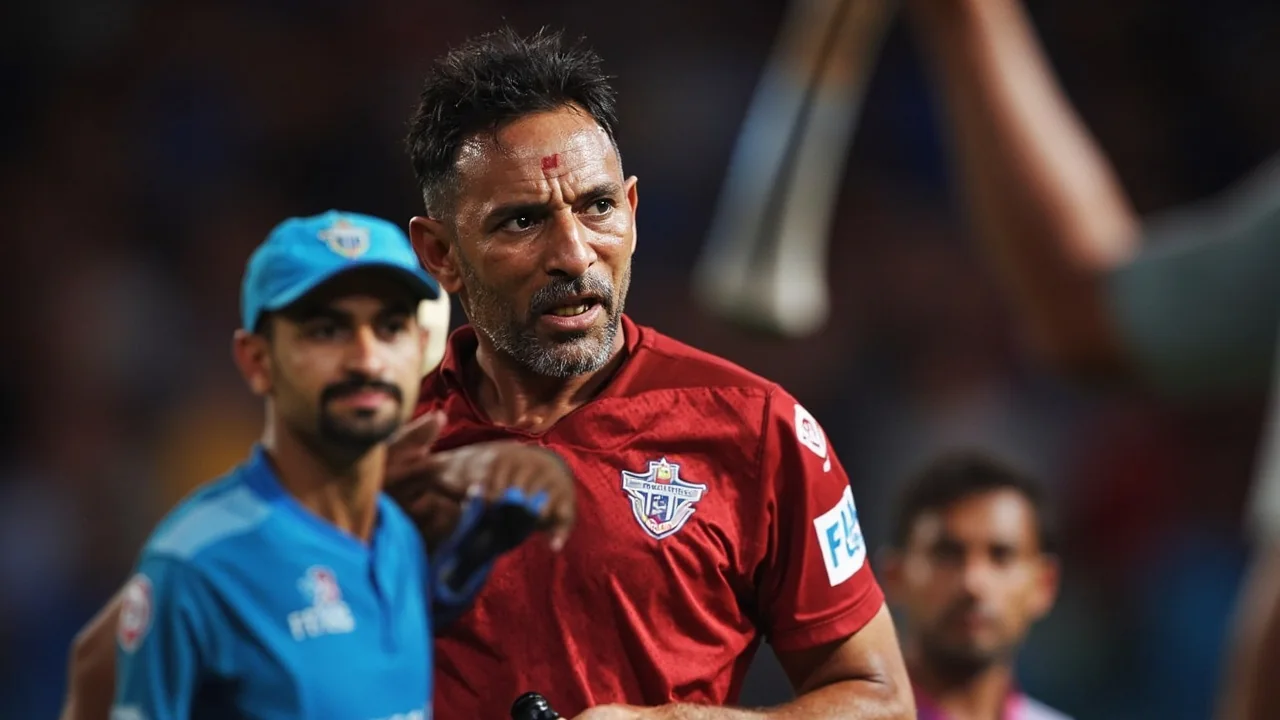
In a video statement circulated to ANI, Lalit Modi welcomed the verdict and said he plans to return to India "probably at the end of this year or early next year." He cited the personal reason behind the timing: his daughter is due with his grandson in October 2026, and he wants to be in India for the birth and the early months of the family event.
The statement was the first concrete timeline Modi has put on a return since the original 2013 controversies around the IPL pushed him out of India. Read alongside the 22 July order, the timing lines up: the personal-penalty overhang is gone, the bank-side allegations have collapsed, and the only surviving financial exposure is on the BCCI as an institution, not on him personally.
Modi has not, in this statement, indicated any immediate return to cricket administration. The framing has been a personal and family one. That distinction matters, because the cricket-administration question is separate from the FEMA question the Tribunal has just resolved.
What survives the ruling, in plain terms
The BCCI remains liable for two penalties totalling Rs 5 crore: the original Rs 4 crore books-of-account penalty that the Tribunal upheld, and a reduced Rs 1 crore penalty on the repatriation delay. SBI and its officer have been acquitted, Modi's personal exposure has been set aside, and the FEMA findings against Srinivasan and Pandove — who had also been named in the 2018 order — fall within the same partly-allowed appeals structure that produced the rest of the order.
The board's overall financial exposure on this case is therefore much smaller than the ED's 2018 order would have implied at full value. The Rs 5 crore figure sits against a board that, on its own audited statements, is one of the richest cricket bodies in the world. As a financial matter, the 22 July order is a settling event, not a stress event, for the BCCI's books.
The legal event is different. The Tribunal's reasoning — that the bank's role was ordinary-course, that the documentation gap on the board's books was real, that the personal exposure lapsed with Modi's suspension — is now the controlling interpretation of how FEMA applied to the 2009 tournament. That interpretation will be cited in any future FEMA case touching large-scale overseas movement of funds by Indian sports bodies, and that is the more durable consequence of the ruling.
What this means for the IPL story into 2026 and beyond
The 2009 South Africa move was, for a long time, the framing story for the original generation of the IPL's off-field controversies. The 22 July 2026 order does not rewrite that history, but it does recalibrate the legal residue around it. For fantasy cricket on MyTeam11, the practical relevance is not in any short-term change to selection or captain-pick math — there is no IPL match directly affected by the order this week.
The relevance is in the framing of the IPL's institutional history as it heads into the second half of the 2026 cycle. The BCCI's official position on the 2009 episode has always been that the South Africa move was operationally necessary and that the financial paperwork around it was a documentation issue, not a misappropriation. The Tribunal's 22 July ruling — upholding the documentation finding, acquitting the bank, setting aside the personal exposure — is, in substance, a softer version of that framing.
For the broader fantasy and cricket-following audience, the order also closes one of the older open questions about the league's founding decade. The 2013 controversies, the 2018 ED order, the years of litigation that followed — that sequence now has a defined end point on the FEMA question. Whether the original framing of the controversies stands in popular memory is a separate question, but the legal residue is now substantially retired.
The October 2026 family window, and what a return would actually look like
Modi's stated reason for the year-end timing is the October 2026 birth of his grandson. A return in that window would put him physically in India during a quieter phase of the international cricket calendar — the men's team is in the middle of its Sri Lanka Test tour and the lead-up to the 2027 ODI World Cup co-hosting cycle with Sri Lanka. There is no IPL season overlap, no BCCI Apex Council meeting window tied to the return, and no public schedule of cricket-administration work tied to the trip.
The practical question that follows — and which will only resolve if and when he does return — is whether Modi will take any public role in the league that he founded and chaired until 2010. He has, since leaving, made periodic statements about the IPL's commercial direction, including criticism of the BCCI's handling of broadcast rights, the franchise-fee structure, and the expansion to ten teams. None of those statements have been tied to a formal role, and there is no indication in the 22 July video that one is on the table.
Read soberly, the more likely scenario is a low-visibility return built around the family event, with media engagement limited and no formal return to cricket administration. The Tribunal's order has cleared the legal residue, but it does not by itself reopen the institutional door. That remains a separate question, and one that the BCCI's current office-bearers would have to engage with directly.
What we are watching between now and the year-end window
The next concrete beat is the formal upload of the Tribunal's full written order on the SAFEMA appellate docket. The bench headed by Justice Munishwar Nath Bhandari will issue a detailed reasoning document in the coming weeks, and that document is what the BCCI's legal team will use to plan any further steps — including whether the Rs 5 crore combined penalty is challenged further, accepted as the final settlement, or paid down within the standard FEMA appellate timeline.
The second concrete beat is the October 2026 family window Modi cited in his video statement. A confirmed return to India during that period would be the first physical return to the country for a sustained stay since the original 2013 controversies. That event itself will be a media moment, even if the cricket-administration angle stays quiet.
For the MyTeam11 editorial desk, the next cricket-and-fantasy beat is the IPL 2026 playoff bracket and the lead-up to the Sri Lanka Test tour that starts on 15 August. The Tribunal order does not change any selection math for the remaining IPL 2026 matches, but it does close one of the older narrative arcs around the league. We will publish a brief follow-up if and when the Tribunal's full written order is uploaded, and again at the point Modi's return-to-India is confirmed. For the latest IPL 2026 news, fixtures and fantasy captain-pick analysis, the IPL 2026 desk is updated daily.
Frequently asked questions
What did the SAFEMA Appellate Tribunal decide on 22 July 2026?
The Tribunal headed by Justice Munishwar Nath Bhandari with Member Rajesh Malhotra partly allowed appeals against the Enforcement Directorate's 31 May 2018 order, acquitting SBI and its officer, setting aside Lalit Modi's personal penalty, and recalibrating the BCCI's exposure to a Rs 4 crore books-of-account penalty and a reduced Rs 1 crore repatriation-delay penalty.
Why was the State Bank of India acquitted?
The Tribunal held that the foreign remittances SBI processed in the run-up to the 2009 South Africa tournament were handled in the ordinary course of banking and were not FEMA violations on the bank's part. That finding withdrew the bank-side ground on which the ED's case had rested.
Why was Lalit Modi's personal penalty set aside?
The Tribunal ruled that by the time the ticket-sale proceeds were eventually returned to India, Modi had already been suspended from the BCCI and the IPL chairmanship. He was therefore no longer the person responsible for the timing of the repatriation, and the personal penalty was set aside.
What total penalty does the BCCI still face?
The BCCI faces a combined Rs 5 crore — the Rs 4 crore penalty for funds exceeding its books-of-account records, which was upheld, and a reduced Rs 1 crore penalty for the delay in repatriating ticket-sale proceeds. The original Rs 4 crore repatriation penalty was cut to Rs 1 crore on the reasoning that the funds were eventually returned.
When does Lalit Modi plan to return to India?
In a video statement to ANI after the 22 July order, Modi said he plans to return "probably at the end of this year or early next year," citing his daughter being due with his grandson in October 2026 as the personal timing for the trip.
Why was the 2009 IPL held in South Africa?
The 2009 IPL season was moved from India to South Africa because the Lok Sabha general elections that year occupied the same window in India. The move was an operational decision at the time, but it produced the funds-transfer paper trail that the ED later framed as the basis of the 2018 FEMA order.
Play fantasy cricket on MyTeam11
Use code MYTEAM100 for the Rs 100 welcome bonus and lock your IPL 2026 mega contest captain pick before the next match window opens.