Virat Kohli Ruled Out of India vs Afghanistan ODIs in June 2026 With Hamstring Injury
On 4 June 2026, BCCI sources told reporters that Virat Kohli would miss India's three-match ODI series against Afghanistan because of a hamstring injury. The white-ball leg was scheduled to open on 13 June, after a one-off Test between the sides at New Chandigarh. This retrospective reconstructs the selection call, the IPL final context that preceded it, and where Kohli stood as an ODI-only international at 37.
What BCCI sources confirmed on 4 June 2026
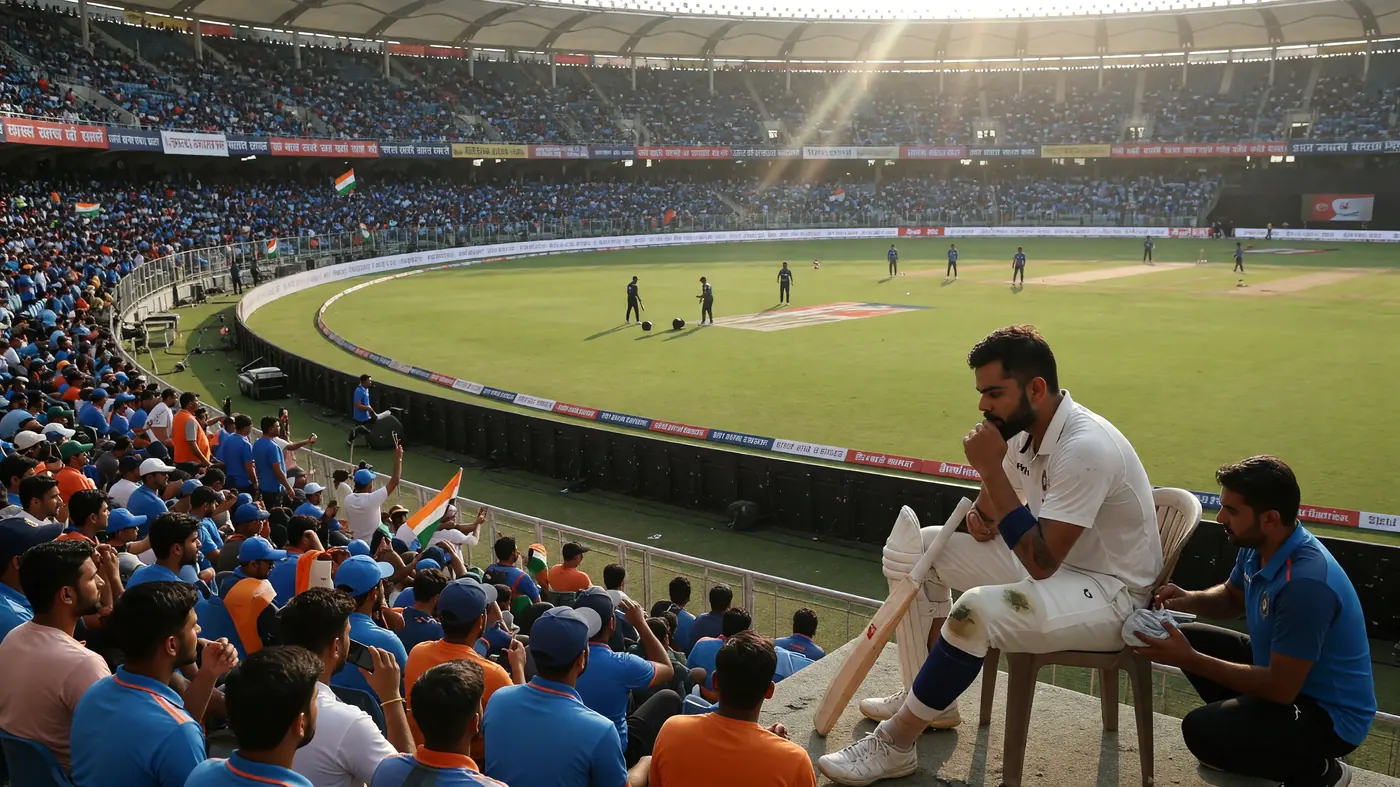
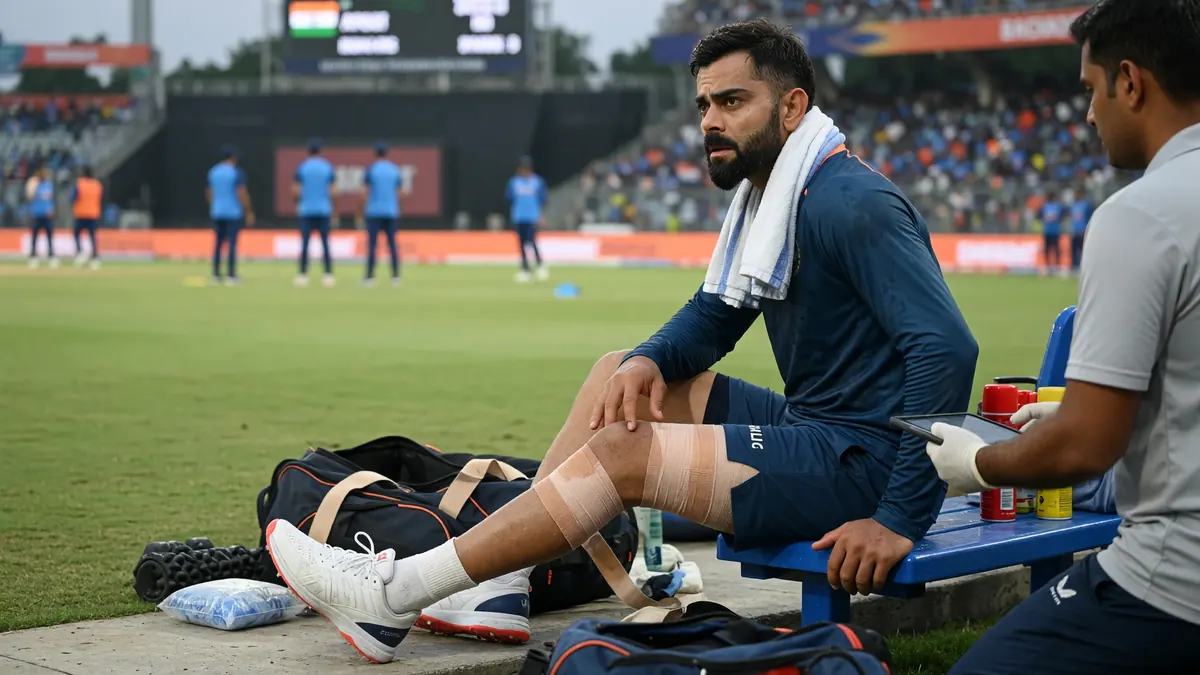
The exclusion was reported by The News Mill on 4 June 2026, citing Board of Control for Cricket in India sources. Star India batter Virat Kohli had been ruled out of the forthcoming ODI series against Afghanistan after picking up a hamstring problem. The board did not, in that report, publish a full medical bulletin with imaging detail or a return-to-play window; the operational fact was the selection decision itself.
The three-match ODI series was lined up to start on 13 June. It was scheduled to follow a one-off Test between India and Afghanistan at New Chandigarh, so the white-ball leg sat immediately after the red-ball assignment on the calendar. Removing Kohli from the ODI pool therefore reshaped India's middle-order options for a short home series against a side that had become a regular white-ball opponent rather than an occasional visitor.
For readers following Indian cricket through fantasy contests and squad news, the timing mattered as much as the diagnosis. The announcement landed days after the IPL final, inside the narrow window when national selectors convert franchise form into bilateral series availability. A hamstring ruling at that point is rarely a one-day story; it tends to decide who bat at three or four across an entire short series. Follow further cricket news for later squad updates from the same window.
The IPL final chase that framed the fitness concern
The fitness concern was not abstract. During the closing stages of the IPL final against Gujarat Titans in Ahmedabad, Kohli had looked to struggle physically even as he steered Royal Challengers Bengaluru through a chase of 156. He finished unbeaten on 75 off 42 balls — a match-defining knock that still left observers noting discomfort late in the innings.
That combination is familiar in modern calendar cricket: a high-value final performance that doubles as the moment a soft-tissue issue becomes impossible to manage through the next international block. The BCCI sources' later ruling out of Kohli for the Afghanistan ODIs aligned with what had been visible under floodlights in Ahmedabad, rather than arriving as a surprise mid-series withdrawal.
How Kohli's IPL season looked before the exclusion
Across the IPL campaign that ended in Ahmedabad, Kohli was RCB's leading run-scorer. He finished with 675 runs from 16 innings at an average of 56.25 and a strike rate of 165.84. The tally included one century and five half-centuries, with a highest score of 105 not out. Those numbers explain why his absence from the next India ODI assignment carried weight: he had just completed one of the more productive franchise seasons of his later career.
The strike rate in particular marked a shift from the more measured IPL phases of earlier seasons. At 165.84, Kohli was scoring at a tempo that fantasy captains treat as top-order ceiling rather than stabiliser value. The century and five fifties also meant he was converting starts at a high rate across 16 innings, not merely posting one or two standout nights. Against that backdrop, a hamstring ruling after the final was a hard stop on form that still looked sharp.
From a selection standpoint, the IPL ledger also complicated replacements. When a batter averages above 55 and strikes above 160 through a full league, the next man up is usually a younger middle-order option who has not yet carried the same volume of high-pressure chases. The Afghanistan ODIs were therefore always going to test India's depth as much as Afghanistan's attack.
Rohit Sharma's parallel fitness question
Kohli was not the only senior name under a cloud. Former captain Rohit Sharma had been named in the ODI squad but remained doubtful for the series pending fitness assessments, according to the same reporting window. The board had not, at the time of The News Mill piece, confirmed a clean bill of health for Rohit either.
That left India staring at a short home ODI series in which both of the side's most experienced white-ball openers or top-order anchors could be compromised. Kohli's exclusion was already confirmed; Rohit's status was still open and contingent on medical clearance. For a three-match assignment, even one confirmed absence reshapes batting order and fielding balance; two overlapping fitness issues force selectors into accelerated promotion of younger batters who may not have shared the dressing room for every bilateral series that year.
The practical effect on team construction was straightforward. If Rohit later cleared fitness, India still needed a reliable No. 3 or No. 4 without Kohli. If Rohit did not clear, the top order would need two simultaneous replacements rather than one. Either path placed a premium on form from the next tier of ODI batters who had been circulating around the white-ball group.
Where Kohli stood as an ODI-only international
By June 2026 Kohli was 37 and operating as an ODI-only international. He had stepped away from T20 internationals after India's 2024 T20 World Cup win and had retired from Test cricket in May 2025, before the 2025–27 World Test Championship cycle. The 50-over format was the last international lane still open to him, which is why an ODI series exclusion carried a different weight than a mid-season T20 rest from earlier years.
The career ledger underlined that concentration. At the time of the report he was described as the second-highest ODI run-scorer, with 14,797 runs in 299 innings at an average of 58.71. The list included a record 54 ODI centuries, 77 fifties and a highest score of 183. Those are not fringe supporting figures; they are the statistical spine of modern Indian white-ball batting. Missing a home ODI series against Afghanistan did not rewrite that record, but it did remove the format's most prolific century-maker from a block of matches that would otherwise have been a natural stage for him.
The New Zealand ODI series that set the recent form baseline
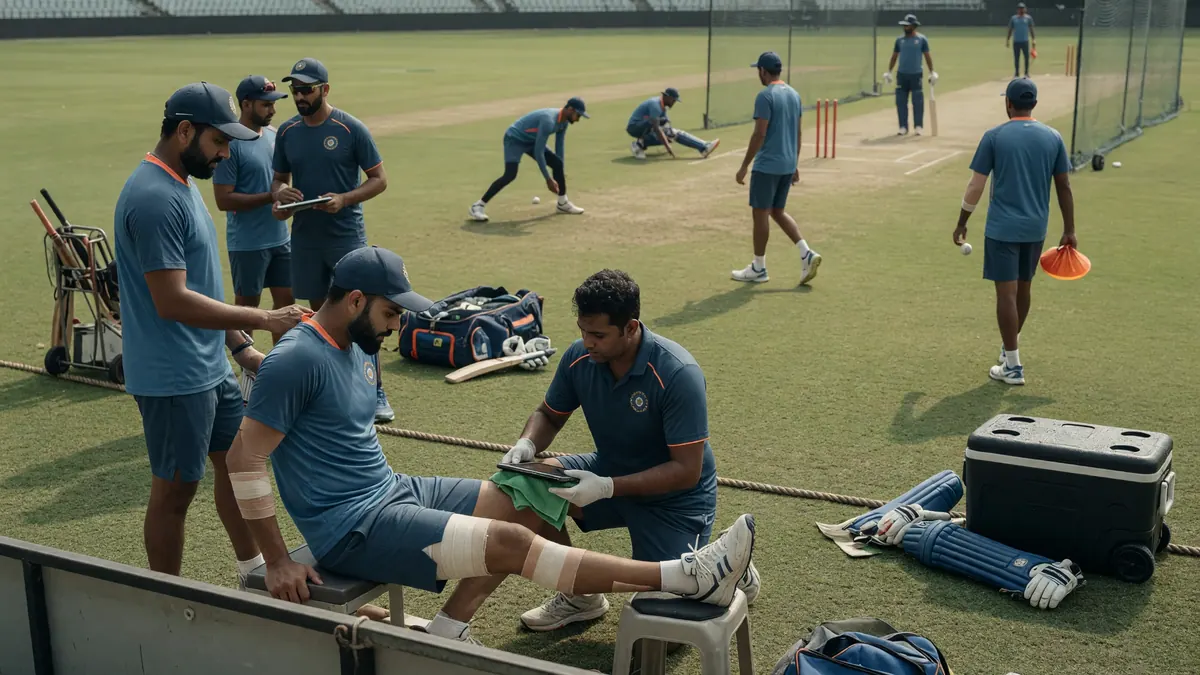
Kohli's most recent ODI series before the Afghanistan assignment had been against New Zealand earlier in 2026. In that three-match set he was India's leading scorer, finishing with 240 runs at an average of 80.00, including a century and a fifty. The numbers mattered because they showed that the IPL finish was not an isolated purple patch: his 50-over form into the middle of the year had already been strong on the international stage.
An average of 80 across three ODIs, with a hundred and a fifty, is the kind of series that usually locks a batter into the next home white-ball window. The hamstring ruling interrupted that sequence. Selectors were not choosing between a declining veteran and a rising option; they were managing a soft-tissue injury for a batter who had just topped India's charts against New Zealand and then led RCB's scoring charts through the IPL.
For fantasy managers building ODI line-ups around that calendar, the lesson was clinical rather than sentimental. Ownership models that assumed Kohli would open the Afghanistan series at a premium credit needed an immediate rewrite once the BCCI sources' confirmation landed on 4 June. Replacement value shifted toward batters already named in the squad and toward any uncapped or fringe options the selectors might promote if Rohit's fitness also failed clearance.
Why a three-match home ODI series still mattered
A three-match ODI series against Afghanistan can look like a low-stakes bilateral on paper. In practice, for an ODI-only senior batter in the second half of his thirties, every home block is a finite resource. Kohli no longer had Test tours or T20 World Cup cycles absorbing his international calendar. The Afghanistan ODIs were part of the remaining schedule in which he could add to a 14,797-run ODI ledger and chase further centuries beyond the record 54 he already held.
The series structure also mattered for India's planning. With a one-off Test at New Chandigarh first and ODIs from 13 June, the white-ball group had a clean runway after the IPL rather than an overlapping red-ball tour abroad. That is usually the window in which senior white-ball specialists are expected to be available. Kohli's absence forced the management to treat the series as a depth audit as much as a bilateral contest.
Afghanistan, for their part, had earned the right to be measured as more than a developmental opponent in ODIs. Facing them without Kohli — and possibly without a fully fit Rohit — changed the experience profile of India's top order even if the home conditions still favoured the hosts. The selection story of June 2026 was therefore as much about India's contingency batting as about one player's hamstring.
What the exclusion did and did not settle
The 4 June confirmation settled availability for the Afghanistan ODIs. It did not, on the public record available in The News Mill report, settle a long-term recovery timetable, a surgery decision, or Kohli's status for later white-ball assignments in 2026. Those questions required separate medical updates that were outside the scope of the initial source briefing.
What can be stated cleanly from the verified record is narrower and more useful. Kohli finished the IPL as RCB's top run-getter with 675 runs at 56.25 and a strike rate of 165.84, including a century and five fifties. He still looked restricted late in the Ahmedabad final while scoring an unbeaten 75 off 42. BCCI sources then ruled him out of the Afghanistan ODIs that were due to begin on 13 June after the New Chandigarh Test. Rohit remained in the squad but doubtful. Kohli's broader ODI standing — 14,797 runs, 54 hundreds, ODI-only status after the 2024 T20 and May 2025 Test retirements — explained why the short series absence still registered as a major selection story.
Read as history rather than breaking copy, the episode sits at the intersection of franchise peak form and international soft-tissue management. The IPL final performance and the ODI exclusion were not contradictory; they were consecutive chapters of the same physical strain. For Indian cricket's 50-over side in June 2026, the immediate task was simpler than the career narrative: name a middle order that could cover Kohli for three home ODIs, while waiting on Rohit's fitness assessments to decide whether one vacancy or two had to be filled.
Key figures from the June 2026 record
| Item | Detail from the verified record |
|---|---|
| Announcement window | 4 June 2026 (BCCI sources via The News Mill) |
| Series start | India vs Afghanistan ODIs from 13 June, after New Chandigarh Test |
| IPL final knock | Kohli 75* off 42 in RCB chase of 156 vs Gujarat Titans, Ahmedabad |
| IPL season | 675 runs, 16 inns, avg 56.25, SR 165.84, 1 hundred, 5 fifties, HS 105* |
| ODI career mark | 14,797 runs, 299 inns, avg 58.71, 54 hundreds, 77 fifties, HS 183 |
| Prior ODI series | vs New Zealand: 240 runs in 3 matches, avg 80.00, 1 hundred, 1 fifty |
| Parallel concern | Rohit Sharma named in ODI squad but doubtful pending fitness checks |
Frequently asked questions
When was Virat Kohli ruled out of the Afghanistan ODI series?
BCCI sources confirmed the exclusion on 4 June 2026, as reported by The News Mill. The three-match ODI series was scheduled to start on 13 June after a one-off Test at New Chandigarh.
What injury kept Kohli out?
A hamstring injury. Sources linked the concern to fitness issues that had been visible in the closing stages of the IPL final against Gujarat Titans in Ahmedabad.
How did Kohli perform in that IPL final?
He scored an unbeaten 75 off 42 balls for Royal Challengers Bengaluru in a chase of 156 against Gujarat Titans, despite appearing to struggle physically late in the innings.
Was Rohit Sharma available for the same series?
Rohit was named in the ODI squad but remained doubtful for the series pending fitness assessments. Unlike Kohli, he had not been fully ruled out in the 4 June reporting.
Why did an ODI exclusion matter more for Kohli by 2026?
He had retired from T20 internationals after the 2024 T20 World Cup win and from Test cricket in May 2025, leaving ODIs as his only international format. At that point he held 14,797 ODI runs and a record 54 ODI centuries.
Build your next ODI contest with live squad news
Use code MYTEAM100 for the Rs 100 welcome bonus and track India white-ball availability before you lock captains.