KKR's March 2026 Pre-Season Brief: Probable XI, Auction Spend and Opening-Week Road Map
On 26 March 2026, three days before Kolkata Knight Riders opened their IPL campaign against Mumbai Indians at Wankhede Stadium, Business Standard published a pre-season squad guide that froze the franchise's first-choice balance, auction ledger and early fixture plan in one place. Read now as a dated archive, that report still maps how KKR intended to start a rebuild season after a sub-par 2025.
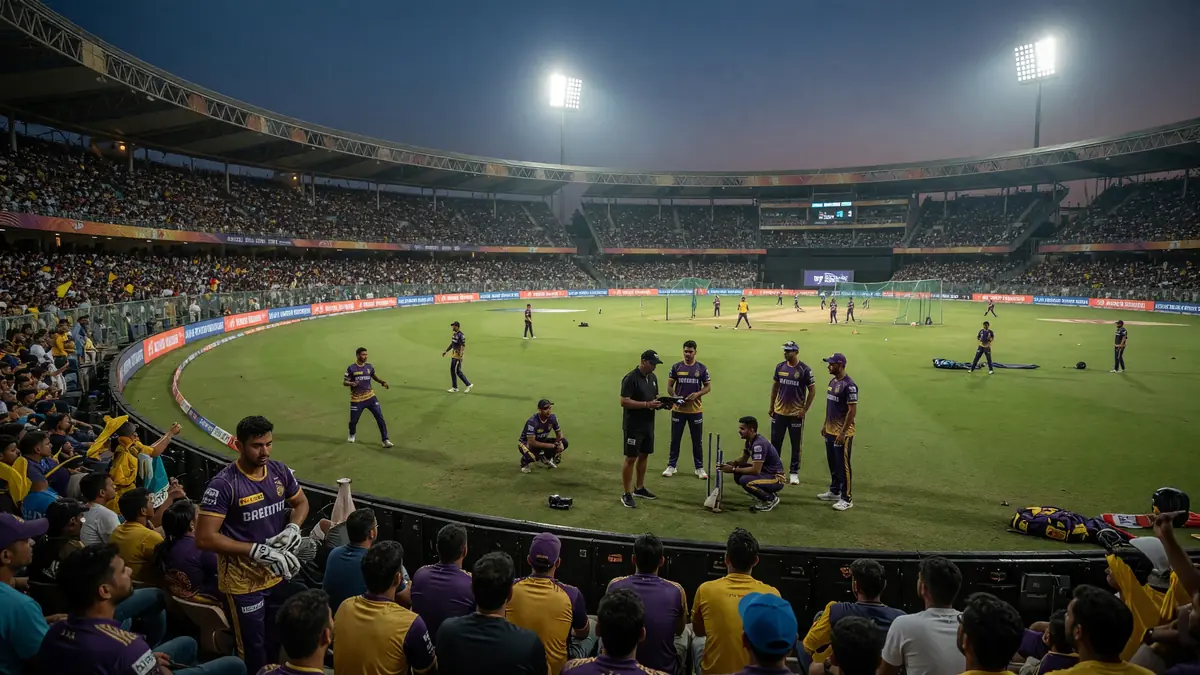
The Business Standard piece carried a clear timestamp: 26 March 2026, 11:07 IST. It treated KKR as a three-time IPL champion that had largely refreshed the supporting cast while keeping a familiar core, and it set the opener for Sunday, 29 March 2026, against Mumbai Indians at Wankhede Stadium with a 7:30 PM IST start. For fantasy readers revisiting the file months later, the value is not prediction accuracy after the fact. The value is the structure the franchise published before a ball was bowled: who sat in the first XI, who was already unavailable, what the auction had already cost, and which three home nights followed the Mumbai trip.
The probable XI Rahane was expected to lead
Business Standard listed a starting eleven built around captain Ajinkya Rahane in the middle order. The top of the card offered a binary choice between Finn Allen and Tim Seifert, then Angkrish Raghuvanshi, Rahane, Cameron Green and Rinku Singh. Sunil Narine and Ramandeep Singh filled the all-rounder band. The bowling spine ran Blessing Muzarabani, Vaibhav Arora, Varun Chakravarthy and Kartik Tyagi. That is a side with two genuine spin options already inside the first eleven, a seam pair that can share the new ball, and a middle order that can bat deep if Green and Ramandeep keep overs in reserve.
Impact-player options were named with equal clarity. Umran Malik was listed as the bowling substitute; Manish Pandey as the spare batter. Those two names tell you how the bench was meant to work on different nights. If KKR needed an extra quick at a high-scoring venue, Malik was the flex. If the top order failed early, Pandey was the batting cover. Neither name appeared in the first XI, which kept the foreign-player arithmetic clean for the preferred starting group.
The XI also revealed what the franchise was willing to leave out of the first-choice balance. There was no separate specialist finisher beyond Rinku and Ramandeep, and no third frontline spinner once Narine and Chakravarthy were locked. That is a deliberate shape: power at the top through Allen or Seifert, a calm captain's hand at three or four, Green as the bridge between middle overs and death overs, and a bowling attack that expects spin to control the middle rather than simply mop up the end.
What the auction and retention sheet already said
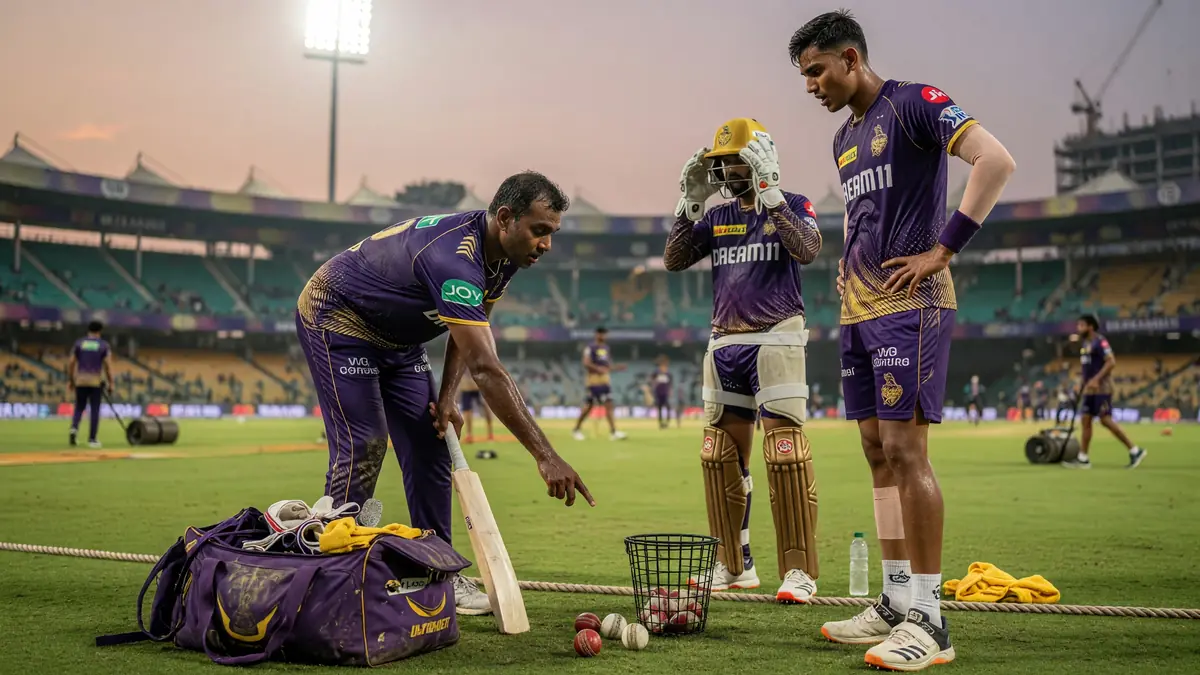
Cameron Green was the headline purchase. Business Standard identified him as KKR's most expensive IPL 2026 auction buy at ₹25.20 crore, lifted from a ₹2 crore base price. That single figure framed the rest of the ledger. Matheesha Pathirana was listed at ₹18 crore. Tejasvi Singh arrived at ₹3 crore. Blessing Muzarabani, Rachin Ravindra and Finn Allen were each marked at ₹2 crore. The auction board therefore spent heavily on one multi-format all-rounder and one premium death bowler, then filled several overseas slots at the floor.
The retained and core salaries completed the picture. Rinku Singh sat at ₹13 crore. Varun Chakravarthy and Sunil Narine were both listed at ₹12 crore. Harshit Rana and Ramandeep Singh were each on ₹4 crore. Rahane's captaincy package was listed at ₹1.5 crore. Read together, the sheet shows a franchise that paid premium rates to keep its death-finisher and its spin pair, then used the auction to buy Green as the new all-rounder spine and Pathirana as the intended death-overs specialist — even though Pathirana's availability was still incomplete on 26 March.
For fantasy construction, those numbers still matter as role signals more than pure price tags. A ₹25.20 crore all-rounder is not a squad luxury; he is a locked first-XI piece unless fitness fails. A ₹13 crore finisher is not a match-up luxury either. Narine and Chakravarthy at ₹12 crore each explain why the probable XI already carried both spinners rather than rotating one of them against left-hand-heavy line-ups. The cheap overseas floor buys — Allen, Muzarabani, Ravindra — were the flexible edges around that expensive core.
Injuries and paperwork that changed the available attack
The same archive was blunt about who could not be counted on. Harshit Rana and Akash Deep were ruled out for the rest of the season. Matheesha Pathirana was still waiting on a no-objection certificate from Sri Lanka Cricket. That trio of absences rewrites the bowling plan that the auction appeared to build. Without Rana and Deep, the Indian quick stocks thin immediately. Without Pathirana cleared, the ₹18 crore death option is a name on the roster rather than a confirmed over-allocation on opening night.
Against that backdrop, the probable XI's seam choices make more sense. Muzarabani and Arora carry the new ball. Tyagi supplies the third seamer. Malik sits as the impact quick. The attack becomes spin-led by necessity as much as design: Narine and Chakravarthy are not only the expensive retained core, they are also the most reliable overs available if Pathirana remains unavailable and the Indian seam cupboard stays empty. Fantasy users who only looked at auction headlines without the injury note would have over-weighted a death bowler who was not yet cleared to play.
The batting side of the absences was quieter. No top-order batter was ruled out in the Business Standard brief. The uncertainty sat almost entirely with bowling depth and overseas paperwork. That is why Pandey as batting impact and Malik as bowling impact were not symmetrical tools. One covered a collapse. The other covered a missing fourth seamer on nights when the surface did not offer grip.
Opening night at Wankhede, then three straight home fixtures
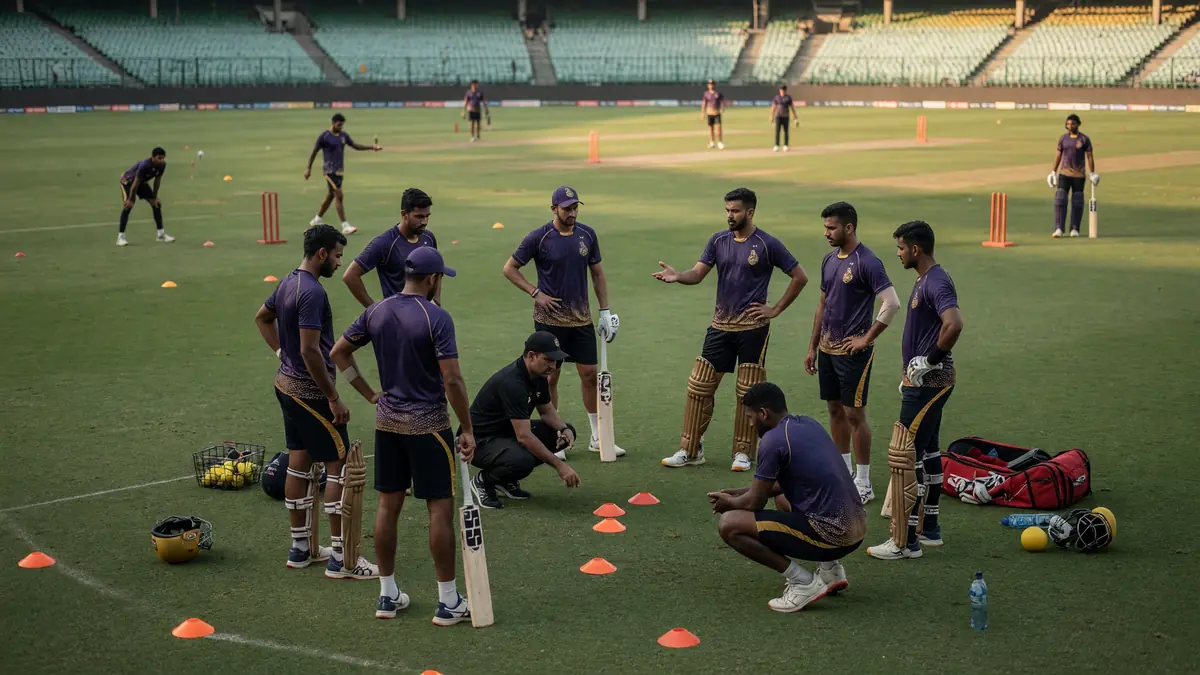
The schedule block in the 26 March report was short and specific. After Mumbai Indians at Wankhede on 29 March at 7:30 PM IST, KKR were listed at Eden Gardens against Sunrisers Hyderabad on 2 April, Punjab Kings on 6 April and Lucknow Super Giants on 9 April. Every one of those four fixtures carried the same 7:30 PM IST start time. The shape is classic early-season KKR planning: one away night in Mumbai, then a compressed home stretch that lets the side settle into Eden Gardens conditions before the middle of April.
Wankhede first is a hard examination for a spin-heavy XI. Short straight boundaries and a true surface usually push totals upward, which is exactly where Green, Allen or Seifert, and Rinku become more important than the mystery-spin pair. The three home games that follow reverse the pressure. Eden Gardens has historically slowed as the evening wears on, and a Narine-Chakravarthy combination becomes easier to justify for a full eight overs between them. Fantasy construction across that four-match window therefore needed two templates, not one: a batting-heavy away card for Mumbai, then a spin-and-finisher card for the Eden run.
Broadcast arrangements were equally plain. Live telecast of KKR's IPL 2026 matches in India was listed on Star Sports Network, with live streaming on the JioHotstar app and website. For a fantasy desk, that detail is operational rather than tactical, but it still mattered on opening week: the same 7:30 PM window, the same national feed, and no ambiguity about where line-ups would surface once toss coverage began.
How the rebuild was framed before a ball was bowled
Business Standard's framing around the franchise itself is part of the archive. KKR entered 2026 as three-time IPL champions after a sub-par 2025 season, carrying a largely revamped squad and a retained core. That sentence is the strategic context for every selection choice above. Green at ₹25.20 crore is not a luxury add-on to a settled title defence; he is the most expensive statement in a reset. Pathirana at ₹18 crore is the attempted answer to death-over control that the previous season did not solve cleanly. Rahane at ₹1.5 crore is the low-cost leadership choice around which the rest of the middle order is stacked.
The retained names — Rinku, Narine, Chakravarthy, Ramandeep, Rana — show what the franchise still trusted after 2025. The injury list then immediately removes Rana from that trust ledger for the season. So the pre-season brief is not a static dream XI. It is a snapshot of a side trying to start a rebuild with one overseas all-rounder paid like a franchise pillar, two spinners paid like franchise pillars, a finisher paid like a franchise pillar, and a bowling cupboard already missing two Indian quicks plus one uncleared overseas death specialist.
Readers who want the broader franchise map around this snapshot can move from this archive into the wider IPL teams and squads coverage, where each side's role clusters and home-ground patterns sit side by side. The KKR file from 26 March is most useful when it is kept in that comparative frame rather than treated as a one-night team sheet.
Fantasy lessons that still hold from the March brief
Three practical reads survive the gap between the original publication date and today. First, Green was never a floating luxury pick in that plan; at ₹25.20 crore and inside the first XI with bat and ball responsibility, he was the default multi-category anchor whenever fit. Second, Narine and Chakravarthy were dual locks, not a rotate-one spin pair, which mattered for eight-over planning at Eden Gardens and for captain leverage on slow surfaces. Third, Pathirana's auction price could not be translated into automatic ownership while the NOC remained unresolved, so Tyagi, Arora, Muzarabani and the Malik impact option were the real early-season pace market.
The opener-or-keeper choice at the top also rewarded patience. Allen and Seifert were presented as alternatives, not a settled pair. That is a classic early-window differential: one name gets the gloves and the powerplay overs, the other waits. Fantasy sides that paid for both before the first toss were guessing at a decision the brief itself left open. Raghuvanshi's place, by contrast, was written as firm, which made him the cleaner young Indian batting exposure in the top three once the overseas opener slot was filled.
Ramandeep at ₹4 crore inside the first XI is the other quiet signal. He was not parked as a pure impact finisher in that preferred eleven; he was selected ahead of Pandey, who was the impact batter instead. That hierarchy matters for ownership models that still treat Ramandeep as a pure death-overs lottery ticket. In the March plan he was already a starting all-round piece beside Narine, with Pandey the emergency batting cover.
What the archive leaves settled, and what it does not
The 26 March Business Standard guide settles the intended opening shape, the salary spine, the confirmed season-long absences of Harshit Rana and Akash Deep, the Pathirana paperwork question, the four-match early schedule and the Star Sports plus JioHotstar broadcast path. It does not settle final toss XIs after 29 March, nor does it claim Pathirana's clearance date, nor does it grade the rebuild against later results. Those limits are why the file works best as a pre-season baseline rather than a season summary.
Kept in that frame, the report remains a clean reference for how KKR wanted to look when they walked into Wankhede on 29 March 2026: Rahane captaining a side rebuilt around Green, Rinku, Narine and Chakravarthy; a top-order choice between Allen and Seifert; a seam unit already compensating for missing Indian quicks; and three Eden Gardens nights queued immediately after the Mumbai opener. For MyTeam11 users studying franchise construction rather than chasing a live lock-in, that is still the useful map.
Frequently asked questions
When was this KKR pre-season brief originally published?
Business Standard published the guide on 26 March 2026 at 11:07 IST, three days before KKR's IPL 2026 opener against Mumbai Indians.
Who captained the probable KKR XI in that report?
Ajinkya Rahane was named captain. His retained salary was listed at ₹1.5 crore.
How much did KKR spend on Cameron Green?
Green was identified as KKR's most expensive IPL 2026 auction purchase at ₹25.20 crore from a ₹2 crore base price.
Which KKR bowlers were unavailable according to the March brief?
Harshit Rana and Akash Deep were ruled out for the rest of the season. Matheesha Pathirana was still awaiting a no-objection certificate from Sri Lanka Cricket.
Where were KKR scheduled to play after the Mumbai opener?
Eden Gardens hosted Sunrisers Hyderabad on 2 April, Punjab Kings on 6 April and Lucknow Super Giants on 9 April, each at 7:30 PM IST.
How were KKR matches broadcast in India in that report?
Live telecast was listed on Star Sports Network, with live streaming on the JioHotstar app and website.
Play fantasy cricket on MyTeam11
Use code MYTEAM100 for the Rs 100 welcome bonus and build your next IPL contest side with cleaner role maps.